Alhamdulillah in Arabic: Text, Meaning & Copy Paste
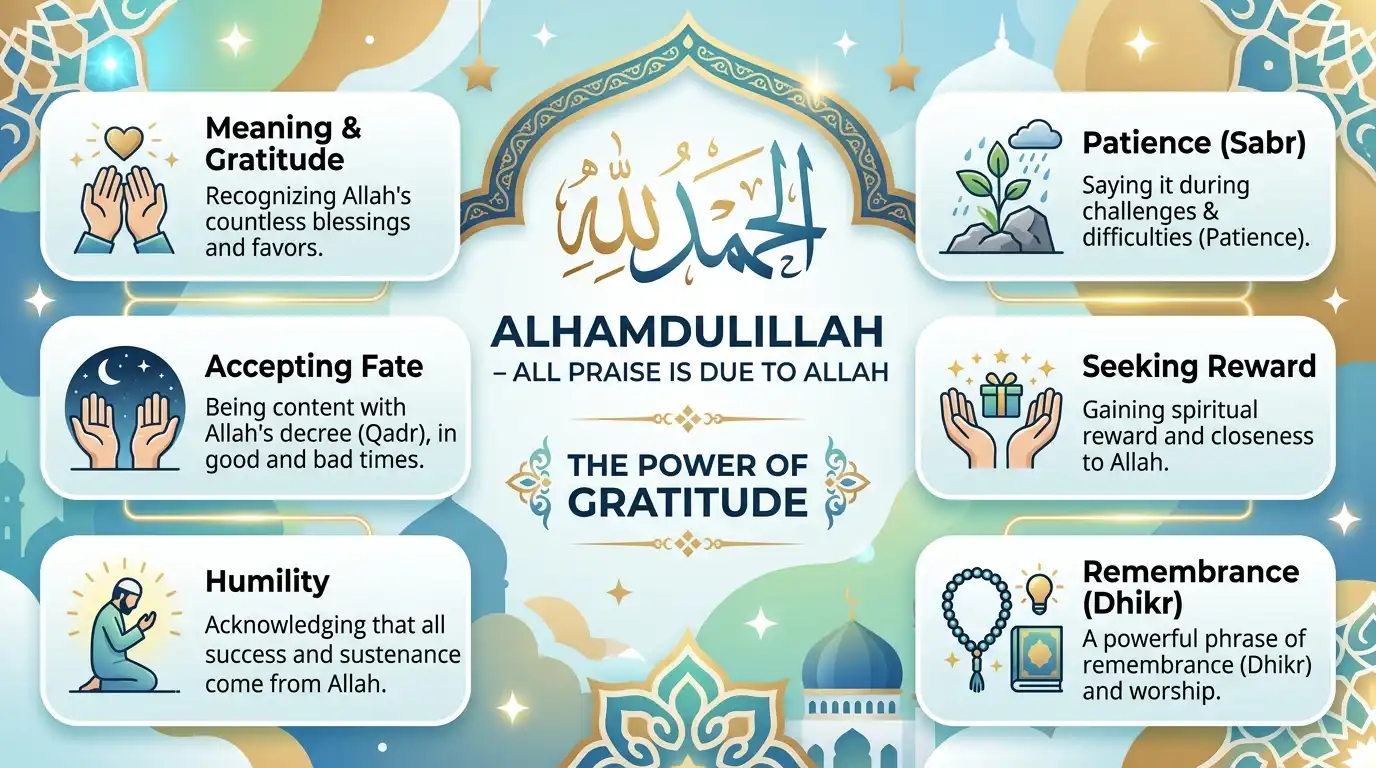
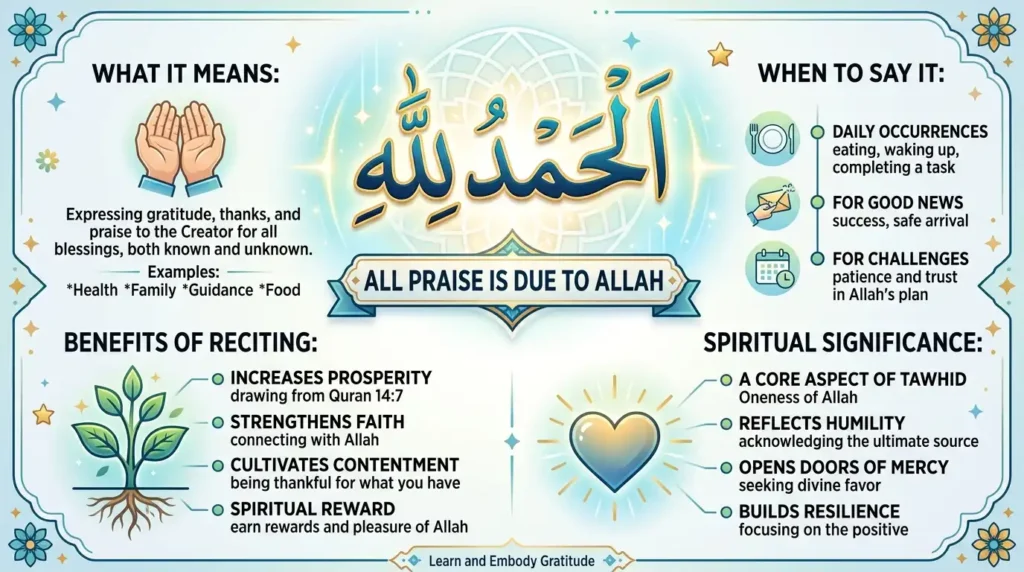
If you are looking for Alhamdulillah in Arabic, the standard Arabic text is:
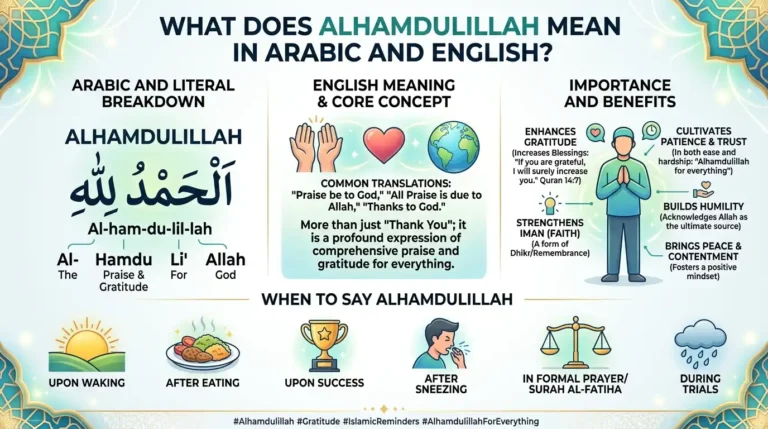
الحمد لله
With diacritical marks, it can be written:
الْحَمْدُ لِلَّهِ
Transliteration: Alhamdulillah
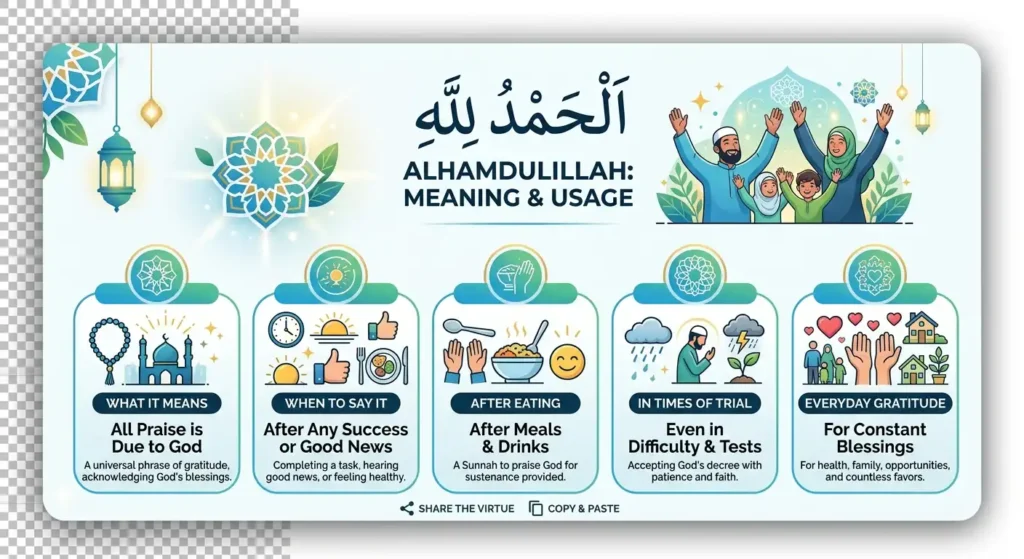
Meaning: All praise is due to Allah / Praise be to Allah.
This page provides the Arabic text in easy copy-and-paste formats, explains the difference between common variations, and shows how phrases such as Alhamdulillah for everything, Alhamdulillah Ala Kulli Haal, and Alhamdulillah Rabbil Alamin are written in Arabic.
The goal is simple: if you need the correct Arabic spelling for a message, social media post, Islamic design, study, or personal use, you can copy the appropriate version directly from this page.
Alhamdulillah in Arabic
The most common way to write Alhamdulillah in Arabic is:
الحمد لله
A fully vocalized version is:
الْحَمْدُ لِلَّهِ
Both forms represent the same Arabic phrase. The version with vowel marks is useful when learning pronunciation or studying the Arabic wording, while the simpler الحمد لله is extremely common in everyday Arabic writing.
Quick Copy
الحمد لله
You can copy the text above and paste it into:
- X
- TikTok
- emails
- documents
- website content
- Islamic designs
- digital artwork
The phrase is used by Muslims throughout the world, while Alhamdulillah is also heard in everyday Arabic conversation among Arabic speakers.
Alhamdulillah Arabic Text
Here are several useful versions of the Alhamdulillah Arabic text.
Simple Arabic
الحمد لله
With Diacritics
الْحَمْدُ لِلَّهِ
Quranic Phrase
الْحَمْدُ لِلَّهِ رَبِّ الْعَالَمِينَ
Transliteration
Alhamdu lillahi Rabbil-‘alamin
English Meaning
All praise is due to Allah, Lord of the worlds.
The longer expression comes from the opening of Surah Al-Fatihah, where the Quran begins:
الْحَمْدُ لِلَّهِ رَبِّ الْعَالَمِينَ
This makes it important to distinguish the standalone everyday phrase الحمد لله from the longer Quranic expression.
Alhamdulillah Arabic Copy and Paste
If your main purpose is to find Alhamdulillah in Arabic copy paste, use one of the following versions.
Version 1 — Simple
الحمد لله
Version 2 — With Diacritics
الْحَمْدُ لِلَّهِ
Version 3 — Alhamdulillah Rabbil Alamin
الْحَمْدُ لِلَّهِ رَبِّ الْعَالَمِينَ
Version 4 — For Social Media
الحمد لله 🤍
Version 5 — Decorative Text
ٱلْحَمْدُ لِلّٰهِ
The exact appearance can differ depending on the Arabic font installed on your device.
If you need a version that is easy to copy, the simplest option remains:
الحمد لله
Arabic text can be copied just like English text. On a phone, press and hold the text, select it, and choose Copy. On a computer, highlight the Arabic text and use Ctrl+C, then paste it with Ctrl+V.
Alhamdulillah for Everything in Arabic
A common search is Alhamdulillah for everything in Arabic.
A natural Arabic expression for “Praise be to Allah for everything” is:
الحمد لله على كل شيء
Transliteration:
Alhamdulillah ‘ala kulli shay’
Meaning:
Praise be to Allah for everything.
However, this should not automatically be treated as identical to the expression Alhamdulillah Ala Kulli Haal.
The Arabic word شيء (shay’) means “thing,” while حال (haal) refers to a state, condition, or circumstance.
Therefore:
الحمد لله على كل شيء
and
الحمد لله على كل حال
are related expressions but have different wording and emphasis.
For someone specifically searching for the Arabic version of “Alhamdulillah for everything,” the first expression is a useful direct rendering.
Alhamdulillah Ala Kulli Haal in Arabic
Another popular expression is:
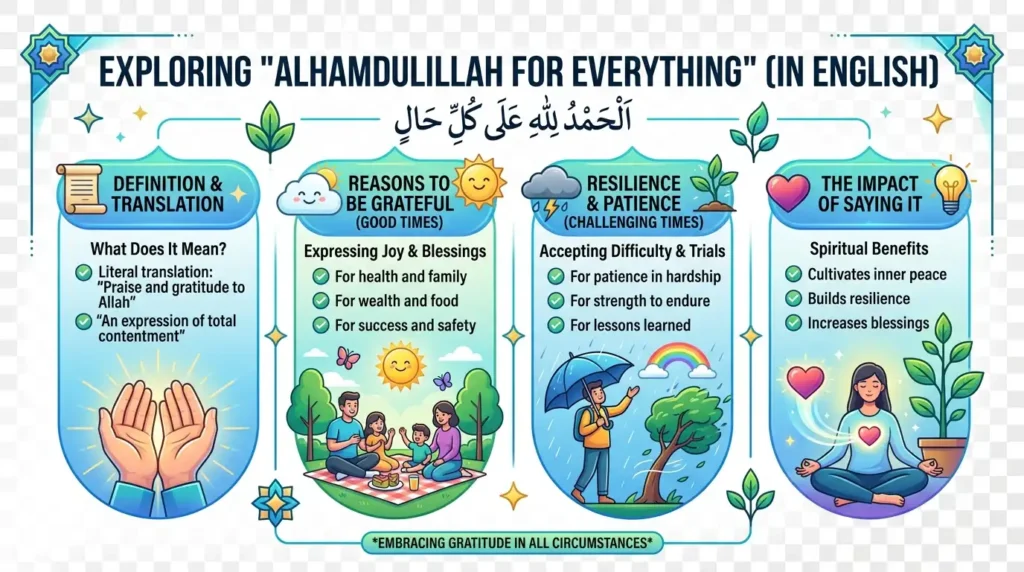
الحمد لله على كل حال
Transliteration:
Alhamdulillah ‘ala kulli haal
It can be translated as:
“Praise be to Allah in every circumstance.”
or:
“All praise is due to Allah in every situation.”
This expression is particularly associated with praising Allah regardless of changing circumstances.
Copy and Paste
الحمد لله على كل حال
The key distinction is:
- شيء — shay’ = thing
- حال — haal = state, condition, circumstance
So if your intended phrase is “Alhamdulillah for everything,” use the wording appropriate to that meaning rather than treating every English variation as exactly the same Arabic sentence.
Alhamdulillah Rabbil Alamin in Arabic
One of the most recognizable Quranic forms is:
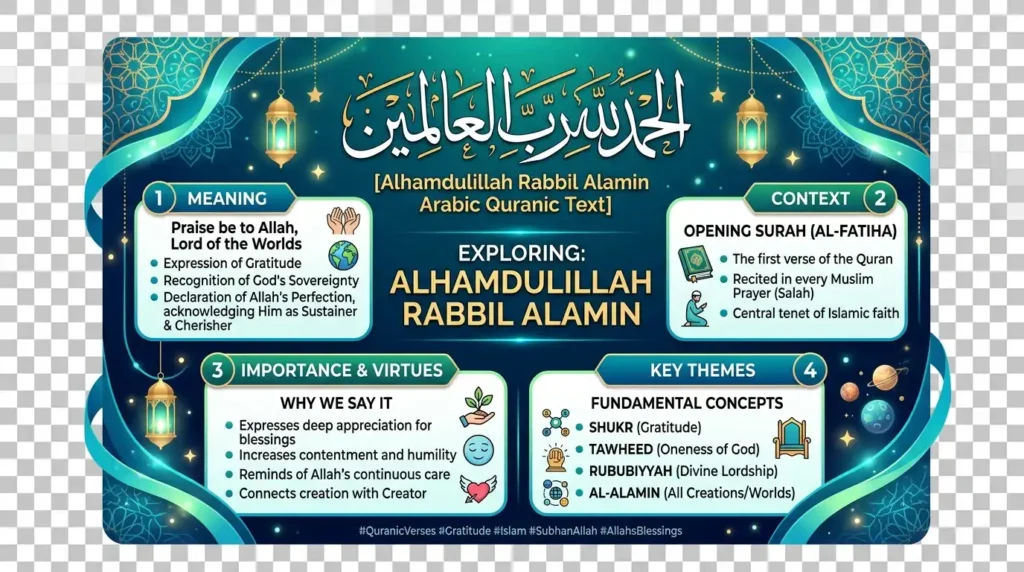
الْحَمْدُ لِلَّهِ رَبِّ الْعَالَمِينَ
Transliteration:
Alhamdu lillahi Rabbil-‘alamin
Meaning:
“All praise is for Allah, Lord of the worlds.”
This is the second verse of Surah Al-Fatihah in the commonly used verse numbering.
The phrase contains:
- الْحَمْدُ — the praise
- لِلَّهِ — for Allah
- رَبِّ — Lord
- الْعَالَمِينَ — the worlds
If you are looking for the complete Quranic expression rather than just Alhamdulillah, this is the appropriate Arabic text to copy.
Copy and Paste
الْحَمْدُ لِلَّهِ رَبِّ الْعَالَمِينَ
The phrase is also frequently written without full vowel marks:
الحمد لله رب العالمين
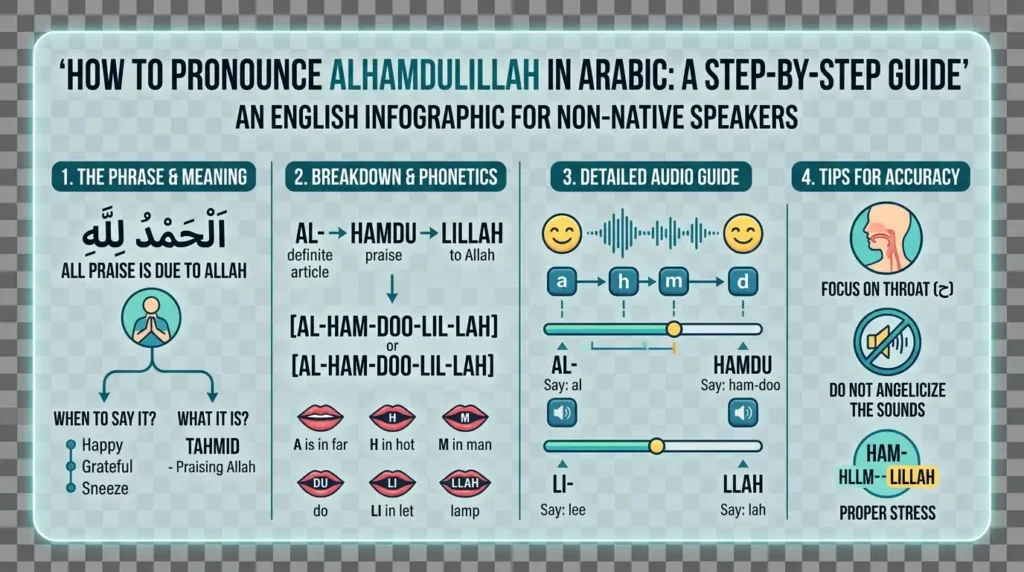
How to Pronounce Alhamdulillah
The common transliteration is:
Alhamdulillah
A simple pronunciation guide for English speakers is:
al-ham-doo-lil-lah
The Arabic spelling is:
الْحَمْدُ لِلَّهِ
The pronunciation is easier to understand when the phrase is divided into its components:
al + hamdu + lillah
Arabic pronunciation contains sounds that do not have exact English equivalents. In particular, the Arabic ح in حمد is a deeper breathy “h” sound than the ordinary English “h.”
Arabic speakers may also pronounce the phrase somewhat differently in rapid everyday speech. Language-learning resources note that casual spoken Arabic can reduce or connect sounds compared with careful pronunciation.
If you are learning Quranic Arabic, it is better to listen to a qualified teacher or reliable Arabic pronunciation resource rather than relying entirely on English transliteration.
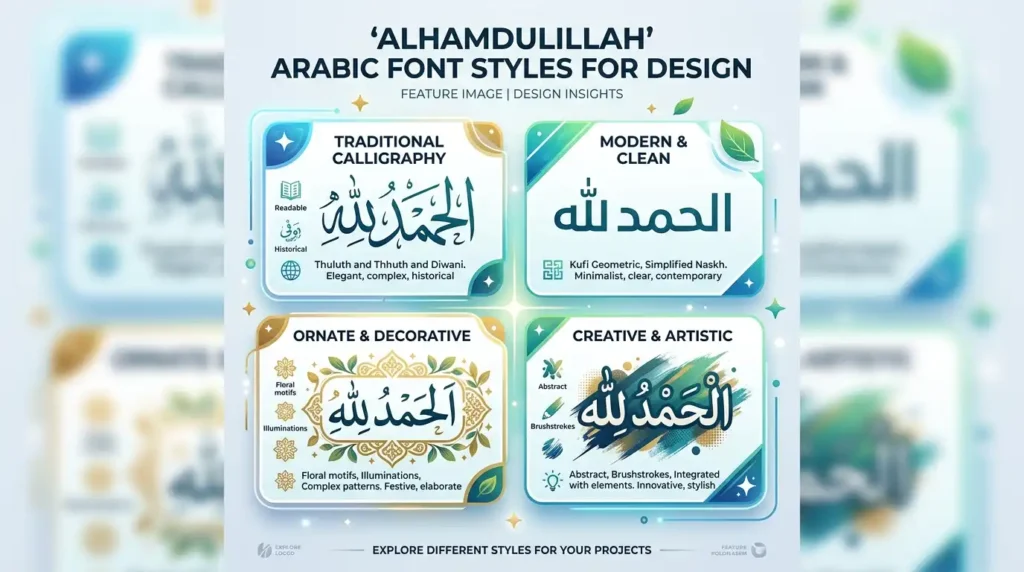
Alhamdulillah Arabic Font
The Arabic letters themselves do not change simply because you choose a different font.
For example:
الحمد لله
can appear in many different Arabic typefaces while remaining the same words.
This matters if you are searching for:
- Alhamdulillah Arabic font
- Alhamdulillah in Arabic font
- Arabic calligraphy
- Islamic typography
- Alhamdulillah logo designs
- Arabic wall art
- social media graphics
A font changes the visual appearance rather than the underlying wording.
Important Difference: Font vs Text
If you copy:
الحمد لله
you are copying actual Arabic text.
If you download an image showing Alhamdulillah in calligraphy, you are copying an image rather than editable Arabic characters.
For websites, social posts, documents, and messages, actual Unicode Arabic text is generally more useful because it remains selectable and searchable.
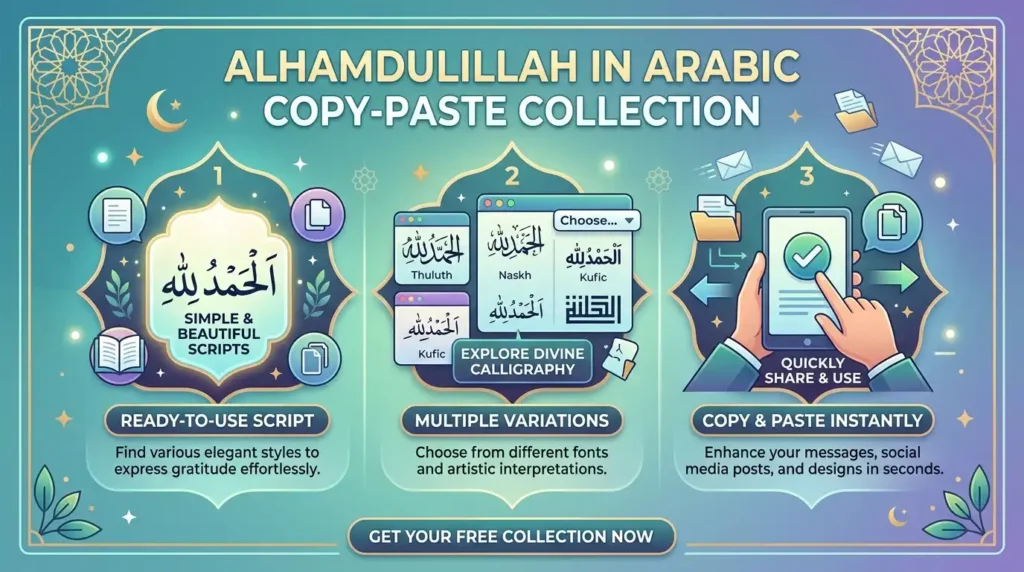
Alhamdulillah Arabic Calligraphy
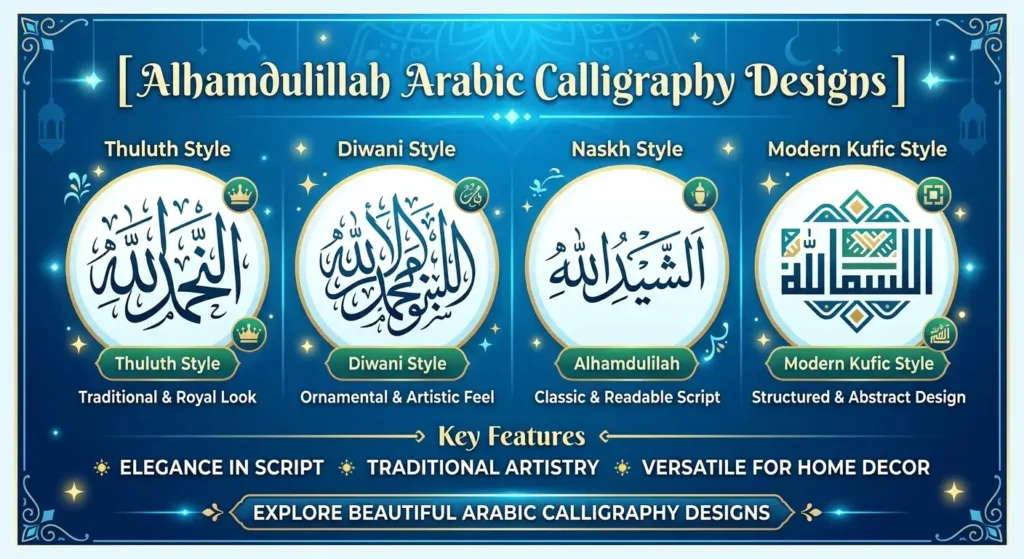
Alhamdulillah Arabic calligraphy can take many forms.
Traditional Islamic calligraphy may use styles such as:
- Naskh
- Thuluth
- Diwani
- Kufic
- contemporary Arabic lettering
The underlying phrase can remain:
الحمد لله
while the calligrapher changes its visual arrangement.
For example, a designer may create a circular composition, horizontal inscription, geometric design, or decorative wall-art layout.
If you are commissioning or creating Islamic artwork, accuracy of the Arabic text should come before decorative styling. A visually attractive design is not useful if the Arabic wording is incorrectly written.
Alhamdulillah Quotes in Arabic
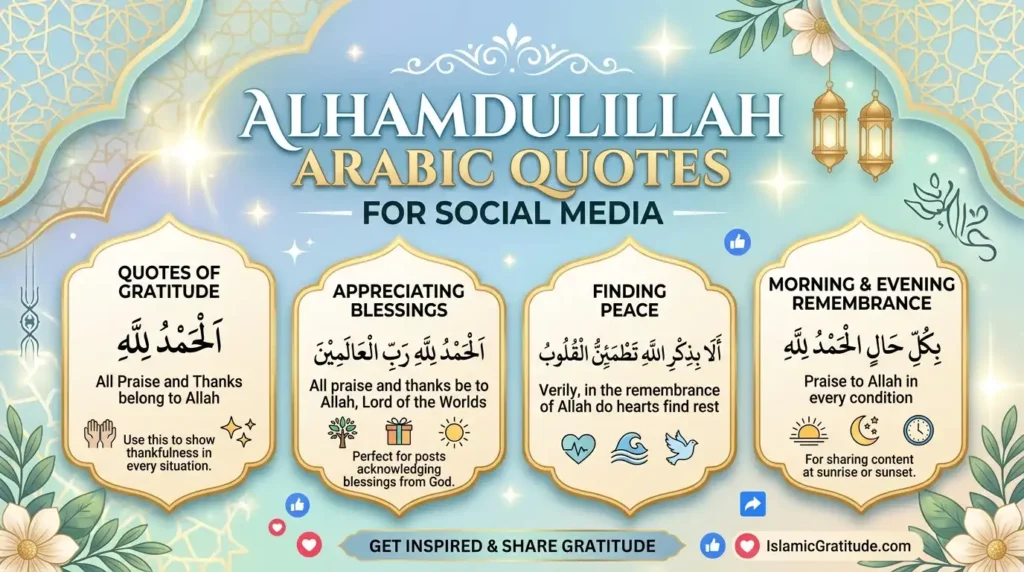
If you want to use Alhamdulillah quotes in Arabic, you can combine the phrase with other appropriate Arabic expressions.
Simple
الحمد لله
Alhamdulillah — Praise be to Allah.
Alhamdulillah for Every Blessing
الحمد لله على كل نعمة
Meaning:
“Praise be to Allah for every blessing.”
Alhamdulillah for Everything
الحمد لله على كل شيء
Meaning:
“Praise be to Allah for everything.”
Alhamdulillah in Every Circumstance
الحمد لله على كل حال
Meaning:
“Praise be to Allah in every circumstance.”
These expressions should not be presented as though they are all Quranic verses. Some are ordinary Arabic expressions, while others have specific religious contexts. That distinction is important when publishing Islamic content.
Why Is Alhamdulillah Written in Arabic?
There are several reasons people search specifically for the Arabic version rather than an English translation.
For Social Media
People may want to add:
الحمد لله
to an Instagram caption, WhatsApp status, Facebook post, or profile.
For Islamic Designs
Arabic calligraphy is widely used in Islamic artwork, posters, educational materials, and home decoration.
For Learning Arabic
Seeing the original Arabic script helps learners connect the transliteration Alhamdulillah with its actual written form.
For Accurate Copying
Arabic typing can be difficult for people who do not have an Arabic keyboard. Copying the correct Unicode text avoids many spelling and keyboard mistakes.
Alhamdulillah in Arabic vs Alhamdulillah in English
The English transliteration is:
Alhamdulillah
The Arabic script is:
الحمد لله
The English translation is:
All praise is due to Allah.
These are three different things:
| Format | Example |
| Arabic | الحمد لله |
| Transliteration | Alhamdulillah |
| English meaning | All praise is due to Allah |
Using the Arabic text is preferable when you specifically want the original expression. Using transliteration helps readers who cannot read Arabic, while the English translation explains its meaning.
The phrase is commonly translated as “praise be to Allah” or “praise be to God.”
Is الحمد لله Correct Arabic?
Yes.
الحمد لله is the standard Arabic spelling of Alhamdulillah.
A fully vocalized form is:
الْحَمْدُ لِلَّهِ
You may encounter slightly different typographic forms online because Arabic text can use different Unicode characters, diacritic combinations, or fonts.
For ordinary copy-and-paste purposes, this version is straightforward:
الحمد لله
When copying Arabic religious text, however, it is sensible to verify the wording against a reliable Arabic or Quranic source rather than trusting decorative images or automatically generated text.
FAQs About Alhamdulillah in Arabic
How do you write Alhamdulillah in Arabic?
Alhamdulillah is written الحمد لله in Arabic. A fully vocalized version is الْحَمْدُ لِلَّهِ. Both represent the phrase commonly transliterated as Alhamdulillah.
What is Alhamdulillah in Arabic copy and paste?
You can copy this Arabic text directly:
الحمد لله
For a version with diacritics, use:
الْحَمْدُ لِلَّهِ
What does Alhamdulillah mean?
Alhamdulillah means “All praise is due to Allah” or “Praise be to Allah.” It is commonly used by Muslims to praise Allah and express gratitude.
How do you write Alhamdulillah for everything in Arabic?
A direct Arabic rendering is:
الحمد لله على كل شيء
It means approximately “Praise be to Allah for everything.”
How do you write Alhamdulillah Ala Kulli Haal in Arabic?
It is written:
الحمد لله على كل حال
It can be translated as “Praise be to Allah in every circumstance.”
How do you write Alhamdulillah Rabbil Alamin in Arabic?
The Quranic phrase is:
الْحَمْدُ لِلَّهِ رَبِّ الْعَالَمِينَ
It means “All praise is for Allah, Lord of the worlds.”
Is Alhamdulillah an Arabic word or phrase?
Alhamdulillah is an Arabic phrase consisting of words expressing praise directed toward Allah. It is widely used by Muslims and is also part of Quranic Arabic.
Can I use Alhamdulillah Arabic text on social media?
Yes. You can copy الحمد لله and use it in captions, statuses, messages, or designs. If you use a longer Quranic passage, verify the Arabic text carefully before publishing it.
Final Copy-Paste Section
If you came to this page simply to copy Alhamdulillah in Arabic, here are the most useful versions in one place.
Alhamdulillah
الحمد لله
Fully Vocalized
الْحَمْدُ لِلَّهِ
Alhamdulillah for Everything
الحمد لله على كل شيء
Alhamdulillah Ala Kulli Haal
الحمد لله على كل حال
Alhamdulillah Rabbil Alamin
الْحَمْدُ لِلَّهِ رَبِّ الْعَالَمِينَ
Transliteration
Alhamdulillah
Basic English Meaning
All praise is due to Allah.
Save or copy whichever version matches what you need. For Quranic wording, especially when using the text in an educational or religious publication, verify the Arabic against a reliable Quran source.

Asrar Ahmad is the founder of PrayersGuide.com and a professional SEO expert based in Pakistan. As a practicing Muslim with years of experience in digital content, He is dedicated to making authentic Quranic prayers/duas and Islamic prayers accessible to English-speaking Muslims worldwide. All content is carefully researched and sourced from the Quran and authentic Hadith only.